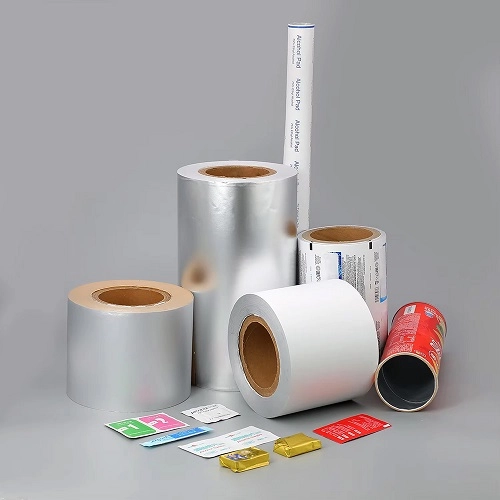
Aluminum Foil Lamination Paper: Materials, Processes, Performance, and Applications
Aluminum foil lamination paper is a multifunctional composite material engineered to combine the barrier performance of aluminum foil with the mechanical, printable, and economic advantages of paper substrates. Widely used in packaging, insulation, construction, and specialty industrial applications, this material system addresses demanding requirements such as moisture and oxygen resistance, thermal reflectivity, product protection, sustainability, and cost efficiency.
1. Introduction
Paper-based materials alone provide excellent stiffness, printability, and renewability, but they lack adequate barrier properties against gases, light, and moisture. Aluminum foil, conversely, offers near-perfect barrier performance but is mechanically fragile and difficult to process independently. Aluminum foil lamination paper integrates these two materials into a layered composite, leveraging the strengths of each while mitigating their weaknesses.
The result is a versatile engineered material that has become essential in food and pharmaceutical packaging, building insulation systems, and technical wraps where both protection and processability are required.
2. Material Composition and Structure
2.1 Paper Substrate
The paper layer typically consists of kraft paper, glassine paper, or coated paperboard. Key parameters include:
- Basis weight (gsm): Influences stiffness and tear resistance
- Fiber type: Virgin kraft fibers provide strength; recycled fibers improve sustainability
- Surface treatment: Clay or polymer coatings enhance smoothness and adhesive bonding
2.2 Aluminum Foil Layer
Aluminum foil thickness generally ranges from 6–30 μm, depending on application requirements.
- Purity: Typically ≥99% aluminum for optimal barrier properties
- Temper: Soft (O-temper) foils are preferred for lamination due to better conformability
- Surface condition: Degreased and treated to improve adhesion
2.3 Adhesives and Tie Layers
Adhesives are critical to lamination integrity and long-term performance:
- Water-based adhesives: Environmentally friendly, common in paper-dominant structures
- Solvent-based adhesives: High bond strength, used for demanding barrier applications
- Extrusion polymers (e.g., PE): Act as both adhesive and moisture barrier
3. Lamination Technologies
3.1 Wet Lamination
A water-based adhesive is applied to paper, followed by foil bonding and drying.
Advantages: Low cost, eco-friendly
Limitations: Reduced moisture resistance
3.2 Dry Lamination
Solvent-based adhesives are applied, partially dried, then laminated under heat and pressure.
Advantages: Strong bonds, superior barrier performance
Limitations: Solvent recovery required
3.3 Extrusion Lamination
Molten polymer is extruded between paper and foil.
Advantages: Excellent moisture resistance, high productivity
Limitations: Higher energy consumption
4. Functional Performance Characteristics
4.1 Barrier Properties
Aluminum foil provides:
- Oxygen Transmission Rate (OTR): Near zero
- Water Vapor Transmission Rate (WVTR): Extremely low
- Light barrier: 100% opacity
4.2 Mechanical Properties
- Enhanced tear resistance compared to foil alone
- Improved foldability and crease retention
- Paper layer absorbs stresses during handling
4.3 Thermal and Reflective Performance
Aluminum foil reflects up to 95% of radiant heat, making laminated paper effective in insulation and thermal packaging.
5. Testing and Quality Standards
Performance is evaluated using standardized methods developed by organizations such as ASTM International and International Organization for Standardization:
- Peel strength and bond integrity
- WVTR and OTR measurements
- Heat resistance and aging tests
- Print adhesion and rub resistance
6. Applications
6.1 Packaging
- Food wrappers (butter, chocolate, coffee)
- Pharmaceutical sachets
- Aseptic and protective overwraps
6.2 Building and Construction
- Roof and wall insulation facings
- Vapor barriers and reflective layers
6.3 Industrial and Specialty Uses
- Cable wrapping
- EMI and light shielding
- Decorative and protective laminates
7. Failure Modes and Technical Challenges
Despite its advantages, aluminum foil lamination paper can fail due to:
- Delamination: Poor adhesive selection or improper curing
- Pinholing: Thin foil defects reducing barrier integrity
- Paper moisture absorption: Dimensional instability in humid environments
Proper material selection, process control, and quality testing are essential to mitigate these risks.
8. Environmental and Sustainability Considerations
While aluminum foil lamination paper reduces material usage compared to rigid packaging, recycling remains a challenge due to multi-material bonding. Current strategies include:
- Lightweight foil gauges
- Water-soluble or repulpable adhesives
- Design-for-recycling structures
- Increased use of recycled paper fibers
Life-cycle assessments often show favorable outcomes when material efficiency and product protection benefits are considered.
9. Emerging Trends and Innovations
- Bio-based and compostable adhesive systems
- Ultra-thin aluminum foils with improved pinhole resistance
- Hybrid paper–foil–polymer structures for mono-material recycling streams
- Smart laminates with sensing or traceability features
Aluminum foil lamination paper represents a mature yet continuously evolving composite material system. Its unique balance of barrier performance, mechanical strength, thermal efficiency, and processability ensures ongoing relevance across multiple industries. Continued innovation in adhesives, recycling-compatible designs, and sustainable sourcing will further expand its applications while aligning with global environmental goals.