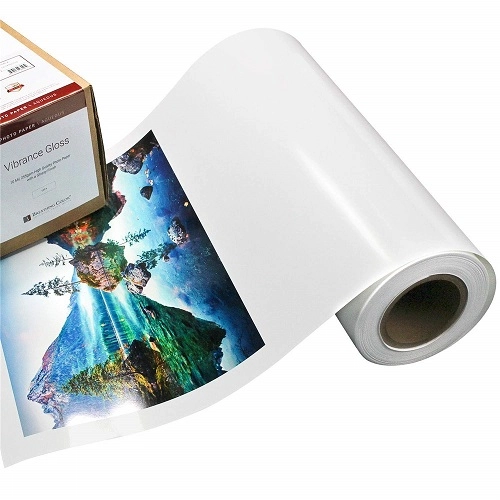
High Gloss Paper: Technical Insights and Applications in Modern Printing
High gloss paper is a widely used substrate in both commercial and artistic printing, valued for its superior visual impact and ability to reproduce vibrant colors with exceptional clarity. Unlike matte or uncoated papers, high gloss paper offers a reflective surface that enhances contrast, sharpness, and color saturation, making it a preferred choice for photographic prints, brochures, magazines, and promotional materials.
1. Composition and Structure
High gloss paper is typically made from high-quality cellulose fibers, often sourced from wood pulp or recycled fibers, with a premium coating applied to achieve its reflective surface. The main structural components include:
- Base Paper: The foundation of high gloss paper, often made from bleached chemical pulp for uniformity, strength, and brightness.
- Coating Layer: A mixture of minerals, pigments, and binders applied to the base paper. Common pigments include calcium carbonate and kaolin clay, which provide smoothness and opacity. Binders, usually starches or synthetic polymers, hold the coating in place and ensure adhesion to the base paper.
- Gloss Layer: A top layer designed to maximize reflectivity, often treated to reduce micro-texture and irregularities that could scatter light.
The thickness of the coating and the particle size of the pigments are crucial in determining the final gloss level and print quality. Smaller pigment particles and a smoother coating surface generally yield higher gloss and sharper image reproduction.
2. Gloss Measurement and Standards
Gloss is quantified using standardized measurement techniques to ensure consistency across production. The most common methods include:
- Specular Gloss: Measured using a glossmeter, which directs a light beam at a defined angle (commonly 60°) and quantifies the reflected light. High gloss paper typically exhibits values above 70–90 GU (Gloss Units) at 60°.
- Surface Smoothness: Micrometer or profilometer analysis measures micro-roughness, affecting how light interacts with the paper. Smoother surfaces produce sharper reflections and more vibrant printed images.
ISO and TAPPI standards govern these measurements, allowing manufacturers and print professionals to reliably compare paper products.
3. Printing Compatibility
High gloss paper interacts differently with various printing technologies due to its coating and surface energy:
3.1. Inkjet Printing
- Absorption: Coated high gloss paper has a limited absorption capacity, requiring inks to dry primarily via adhesion and evaporation rather than penetration.
- Color Saturation: High gloss coatings enhance color vibrancy, allowing inkjet printers to achieve a broader gamut and more vivid tones.
- Drying and Smudging: Special treatments, such as instant-dry coatings, are often applied to minimize smudging and allow rapid handling.
3.2. Offset Lithography
- Ink Transfer: Smooth surfaces ensure precise ink transfer and high-definition details, essential for photographic reproductions and marketing collateral.
- Dot Gain Control: The coating reduces dot gain, preserving the intended tonal range and preventing over-darkening of images.
3.3. Digital and Laser Printing
- High gloss paper is less common in laser printing due to the need for high heat during toner fusion, which may affect the coating. Specialized laser-compatible glossy papers have modified coatings to withstand elevated temperatures.
4. Technical Properties
High gloss paper is engineered to meet specific performance criteria:
- Brightness and Whiteness: Typically ranges from 90% to 100% ISO brightness, enhancing color contrast and visual impact.
- Opacity: The coating reduces show-through, crucial for double-sided prints.
- Curl and Dimensional Stability: Gloss coatings can affect moisture absorption; premium papers include additives to maintain flatness under varying humidity.
- Durability: Gloss coatings also provide minor scratch and scuff resistance, extending the life of printed materials.
5. Applications
High gloss paper finds widespread use across industries:
- Photography: Professional photo prints benefit from vivid colors and fine detail reproduction.
- Advertising and Marketing: Brochures, flyers, and posters achieve a premium look that attracts attention.
- Publishing: Magazines and catalogues utilize high gloss paper to enhance visual storytelling.
- Packaging: Luxury packaging uses high gloss paperboard for reflective, eye-catching finishes.
Emerging applications include fine art prints, high-end greeting cards, and product labels where visual quality is paramount.
6. Limitations and Considerations
While high gloss paper excels in visual quality, it has some constraints:
- Fingerprint Sensitivity: Highly reflective surfaces show smudges easily.
- Glare: Under strong lighting, reflections can hinder readability.
- Cost: The specialized coatings and production processes increase the price relative to standard papers.
- Environmental Concerns: Coatings may complicate recycling unless eco-friendly or biodegradable formulations are used.
7. Future Trends
Innovations in high gloss paper focus on sustainability and enhanced functionality:
- Eco-friendly Coatings: Development of water-based, biodegradable, or recyclable coatings.
- Hybrid Surfaces: Combining gloss with selective matte areas for tactile and visual contrast.
- Enhanced Ink Adhesion: Optimizing coatings for modern digital inks to improve drying speed and durability.
High gloss paper continues to evolve, balancing visual impact, technical performance, and environmental responsibility.
High gloss paper remains a cornerstone of high-quality printing, offering unmatched brilliance, color saturation, and detail reproduction. Understanding its composition, technical properties, and printing compatibility is essential for professionals aiming to achieve superior print results. While it presents some limitations, ongoing innovations in materials and coatings promise to extend its versatility and sustainability, ensuring that high gloss paper will continue to play a key role in both commercial and artistic applications.